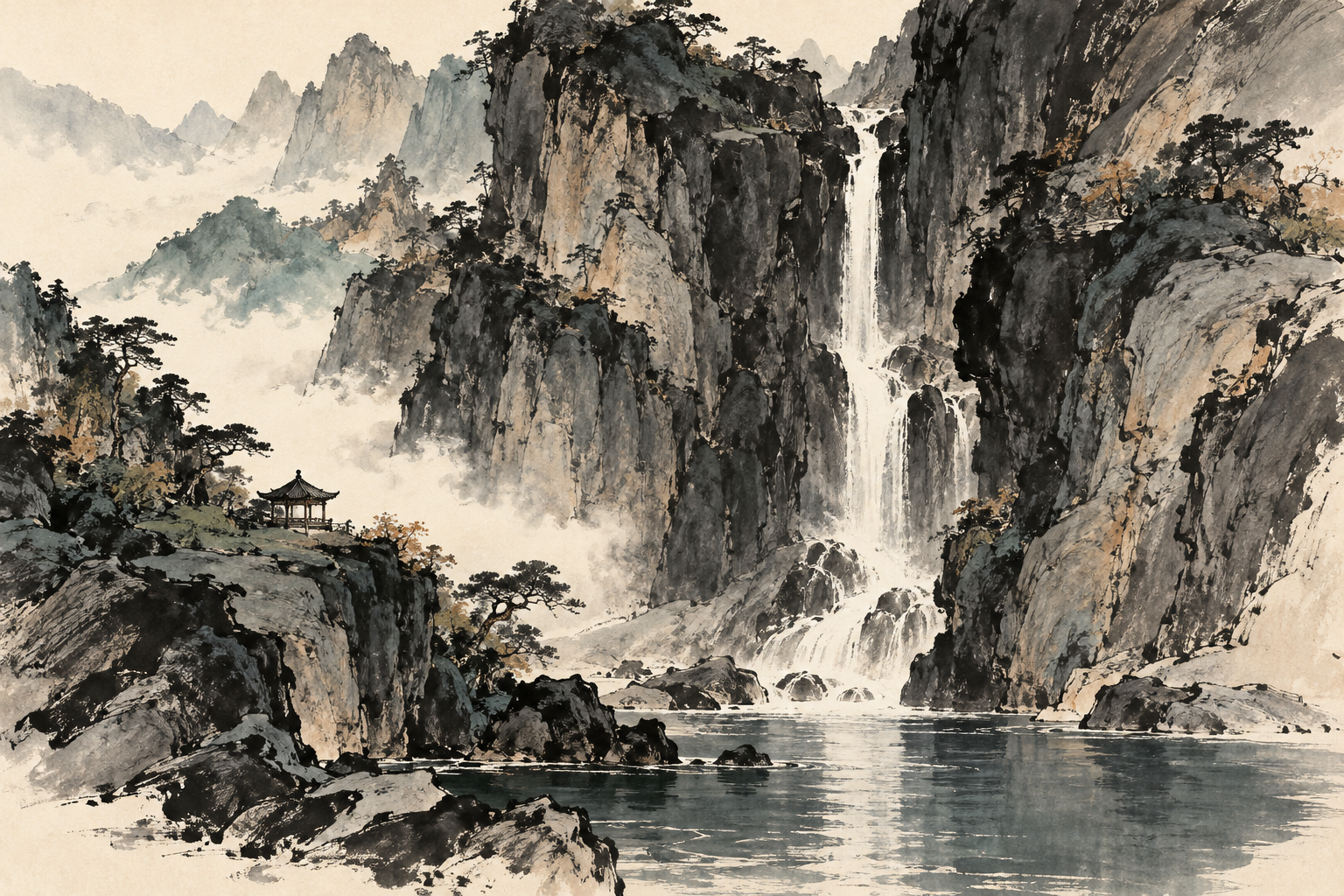
A thin white fall of water can make an enormous ink mountain feel alive. It gives the eye a route from the upper cliffs to a stream below and can make the surrounding rock seem heavier. In a Chinese landscape, the waterfall's visual work is often easier to see than any fixed symbolic meaning.
Trace the water
Find the fall's highest visible point. Is it a pale line left open between dark rocks, or a painted wash? Follow it downward. Does it vanish behind a ledge and appear again? Does it become a pool, river, or mist? The changes make the landscape feel like a sequence of spaces, even when the painting is still.
The Met's exhibition on Chinese landscape traditions describes long scrolls of rolling hills and valleys containing waterfalls, trees, and rocks. A waterfall is one element in that connected world; its path can help a viewer move from one section to the next.
Use nearby details to judge scale
Look for a pavilion, bridge, traveler, or tree beside the falling water. A small human structure can make a cliff feel immense. Then compare the dark and light marks. In Lu Hui's Waterfall on a Cold Cliff, the Met notes both inherited brush ideas and attention to light and shadow. That example is a reminder to look at a particular artist's choices before assuming all waterfalls are painted alike.
Ask what the painting actually supports
Water can evoke movement, sound, and atmosphere, but a waterfall is not automatically a promise of fortune or a single spiritual message. Titles and inscriptions may add context; without them, describe the composition first. If you are comparing reproductions, check that the light stream is still visible against the darkest rock and that the image has not been cropped so tightly that its route disappears.
Explore next: How to read shanshui and how mist creates depth.