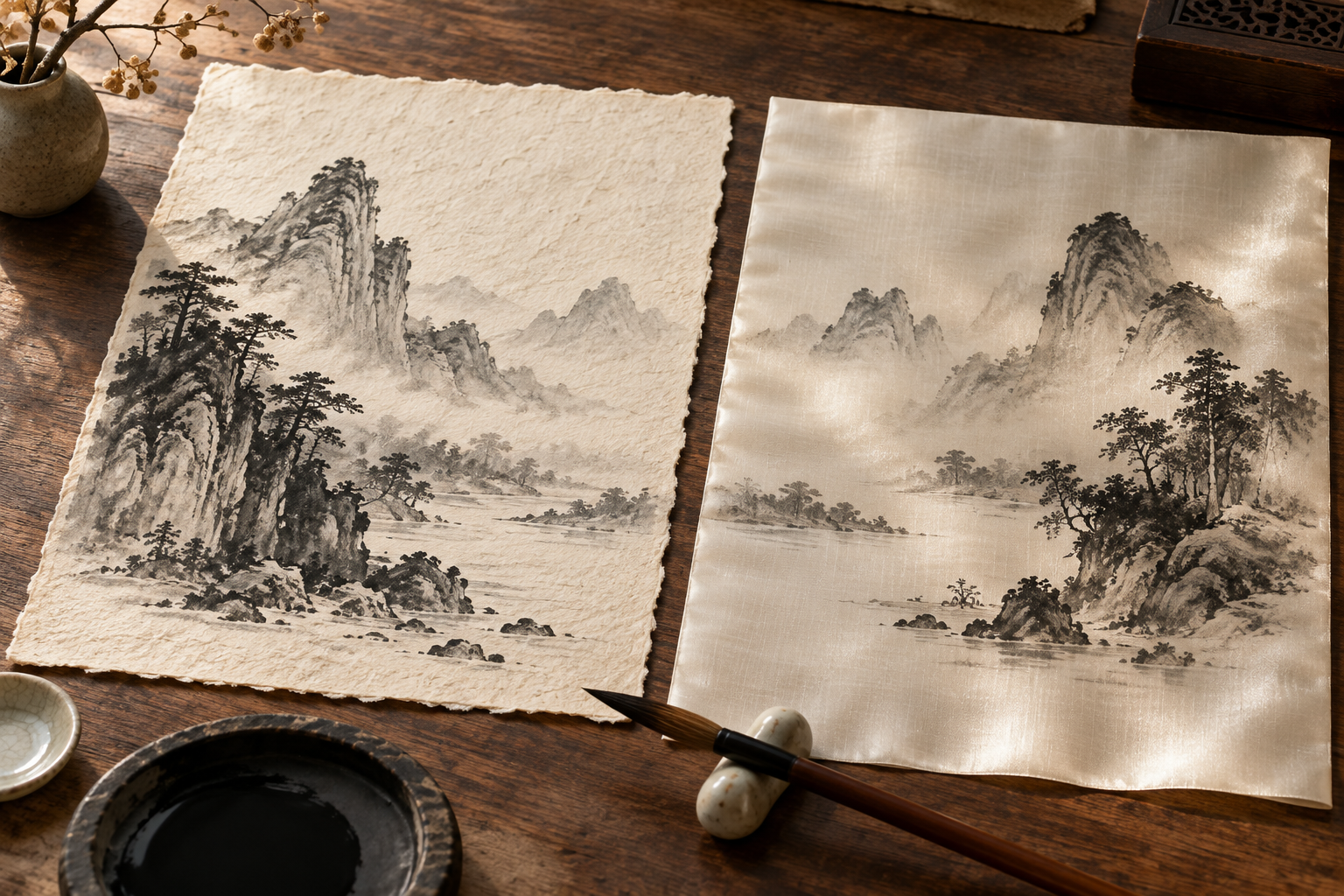
The material beneath a Chinese painting is easy to miss in a digital image. Zoom out and you see mountains or figures; zoom in and the surface may begin to matter. Museum records often say “ink on paper,” “ink and color on silk,” or some combination. Those words identify the physical support and media, not a ranking of which work is better.
What the museum label is telling you
Paper and silk both supported brush painting. The Metropolitan Museum of Art's care guide for East Asian paintings describes ink and pigments applied to paper or silk, then mounted in forms such as scrolls and albums. The support is one layer of an object that may also include backing, borders, inscriptions, and later repairs.
Look at a museum's medium line alongside its format and dimensions. “Ink on paper, handscroll” tells you something different from “ink and color on silk, hanging scroll.” The first describes both the surface and the way the image was encountered. If a web image shows only the painted area, its mounting may be invisible.
Look closely without making assumptions
Some digital photographs reveal paper fibers or the weave of silk. Others are too small or heavily processed to show either reliably. Avoid deciding the support solely from a screen's texture or a warm background color. A catalogue entry is the better starting point.
The Met's introduction to Chinese painting explains that scholar painters often chose ink on paper and used brushwork related to calligraphy, while court and professional painting could favor colorful effects on silk. That is a historical tendency, not a rule for identifying an unknown painting. Artists and periods vary.
What this means for a reproduction
A paper print of a historical silk painting is still a reproduction of an image made on silk; it does not become a silk painting. Ask the seller to distinguish the original work's support from the new print's substrate. Check whether the listing shows the complete image or a crop, and whether the dimensions refer to the printed image or the whole sheet. These details tell you more than an unqualified claim that a print has an “authentic” look.
Explore next: Chinese painting formats and our print checklist.