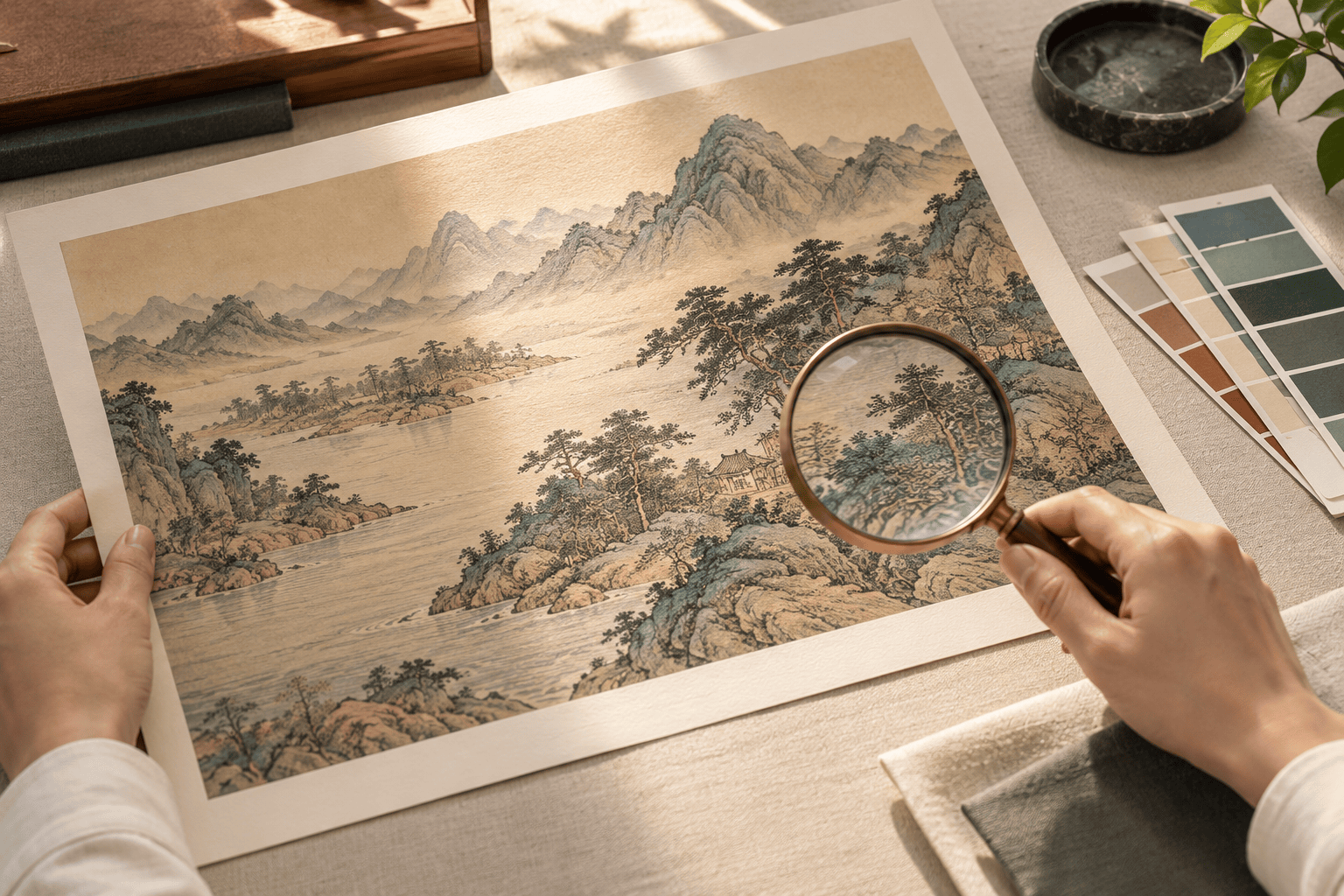
A reproduction can bring a Chinese painting into daily view, but a product photo rarely tells the whole story. Before buying, check the work’s identity and how the reproduction translates its original format. A trustworthy listing should make the image, crop, size, material, and terms easy to understand.
Identify what is being reproduced
Look for the artist, title, date or period, and holding institution when known. Compare the listing with a museum record. If the artist or attribution is uncertain, the seller should say so. A decorative image inspired by a historical style is different from a faithful reproduction of a named work; both can be appealing when described accurately.
Check format and crop
Is the original a handscroll, hanging scroll, or album leaf? The Smithsonian’s format guide explains why those forms are viewed differently. A square crop of a long handscroll may be a deliberate detail, but it should be labeled as one. Ask whether margins, inscriptions, and seals are included or omitted.
Check the physical and digital translation
Confirm printed dimensions in the same unit you use at home, substrate, finish, whether a frame is included, and return terms. Compare the product image with the source record for obvious color shifts or stretching. Screen settings vary, so no screen preview can promise a perfect color match. If fine ink washes matter, inspect a close-up or ask for a sample when available.
Finally, read the seller’s description of image rights and credits. A clear provenance trail helps you understand what you are buying. This checklist is useful whether you choose a museum shop, a gallery, or an independent publisher; it does not imply that every source uses the same materials or quality standard.
Explore next: Choosing landscape art for your home and Chinese painting formats.
Sources: Smithsonian National Museum of Asian Art, “Ways of Seeing—Poetry and Painting”; The Met, “Chinese Handscrolls”. The buying checklist is HUALI editorial advice, not a museum certification standard.