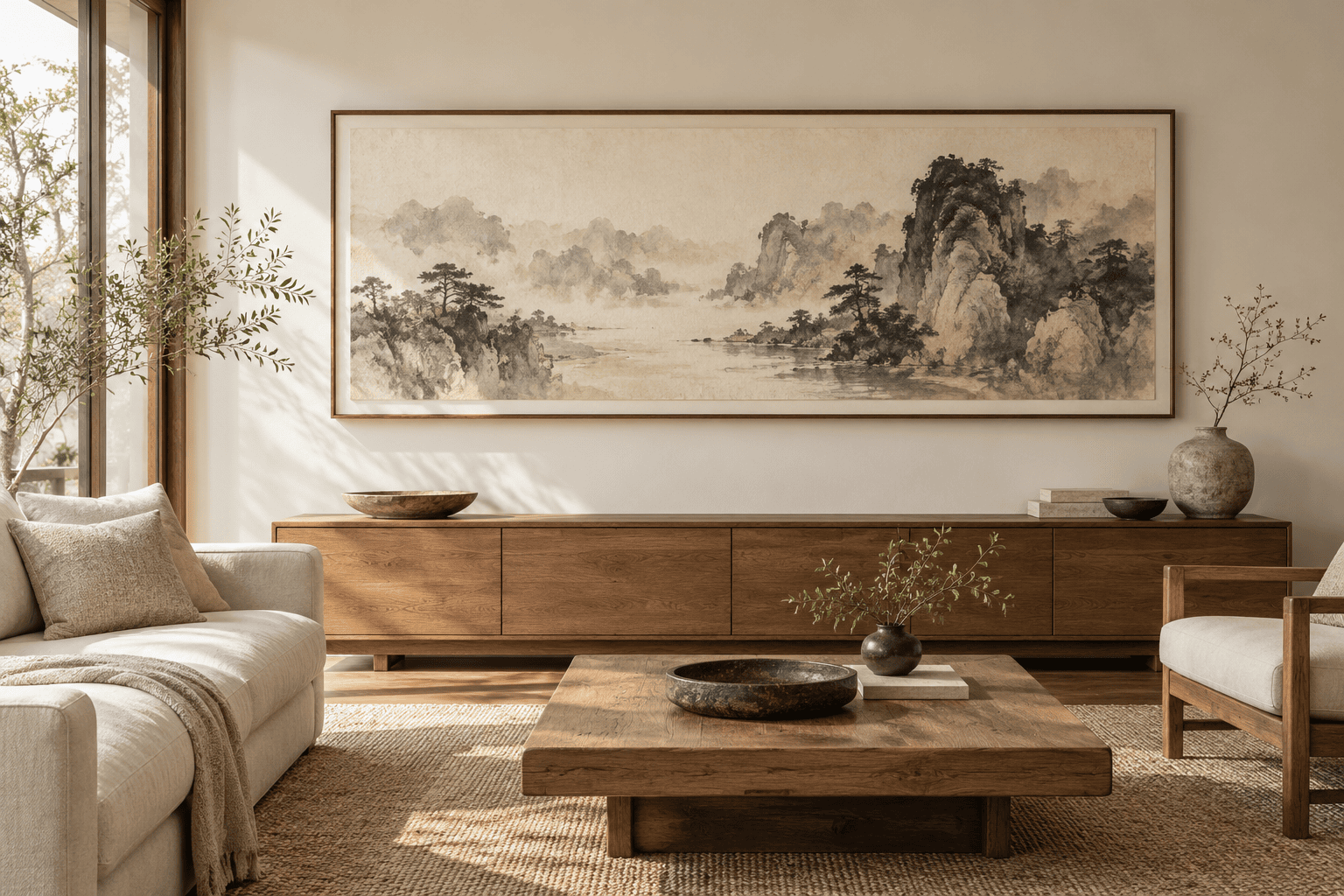
A landscape image can change how a wall feels, but choosing one begins with the artwork rather than the room’s colour scheme. Chinese landscape painting comes in different formats, from wide handscrolls to tall hanging scrolls. Their proportions shape how you see them. A good display choice respects that structure.
The Metropolitan Museum of Art describes the Chinese handscroll as a work viewed gradually. A wide composition therefore asks for a different decision from a tall painting meant to be seen as a whole. Before selecting a file or print, look at the original format and decide what experience you want the image to preserve.
Start with the composition
Is the artwork long and horizontal, tall and vertical, or nearly square? Locate its important details. In Wang Ximeng’s A Thousand Li of Rivers and Mountains, bridges and waterways connect a very long sequence of landscape passages, as the Palace Museum explains. A small print of the complete scroll may retain the colour rhythm but make its buildings and figures hard to see. A detail can reveal those features, provided it is clearly presented as a crop.
For a tall work such as Fan Kuan’s Travelers Among Mountains and Streams, consider whether the wall gives the mountain enough height. Cropping away the lower travellers changes the relationship between people and peak. The National Palace Museum’s record provides the work’s format and dimensions for reference.
Check the actual file
A digital edition should state what you receive: file format, pixel dimensions, whether it is the complete composition or a detail, and what personal use is permitted. Do not infer print quality from a small website preview. If you plan a large print, check the supplied file and speak to your printer about the intended size, paper and finish.
Never stretch an image to fill a frame. Preserve its proportions and use a mat or a different frame size where necessary. If a crop is part of the plan, choose it deliberately and keep the description accurate.
Consider viewing distance and light
A picture with small figures, buildings or brushwork rewards close looking. Leave enough space to approach it. A broad composition may also need a wider sightline so you can step back and see how its sections connect.
Light affects what you can see. Test the proposed position at different times of day, watching for glare and lost detail. A restrained frame can support the artwork without competing with it. These are practical display choices, not historical rules about where a painting must hang.
Leave room for your own reading
A museum record can explain the work’s maker, materials and visual structure. Your response to it is personal. The Metropolitan Museum of Art describes Chinese landscapes as more than literal records of scenery; they can carry ideas and feelings. That does not mean any one image guarantees calm, good fortune or another outcome. Choose the work you want to keep looking at.
Continue exploring: Compare works in the HUALI collection, and read the buying guide before choosing a digital edition.