Two museum records can carry nearly the same title and describe two different paintings. The way to keep them apart is not to memorize titles but to compare a fixed set of fields in a fixed order: artist heading, date wording, support and format, then the exact attribution phrase. A title is a label attached to an object; the fields are what the catalog actually asserts.
A case where two titles nearly collide
One record is the National Palace Museum entry for Peach Blossoms and Mountain Birds, which names Wang Yuan and lists peach blossoms, birds, unusual rocks, a stream and bamboo among its subjects, with paper as the support. The other is a Smithsonian record for Flowers and birds, catalogued as formerly attributed to Wang Yuan, dated 1644-1912 under the Qing dynasty, ink and color on silk.
They share a painter name and a genre, and nothing in these notes connects them. Support, date wording and attribution status all differ. A near-match is a prompt to keep reading, not evidence of a duplicate record or a pendant pair.
National Palace Museum: Peach Blossoms and Mountain Birds · Smithsonian: Flowers and birds
Four fields, read in order
Take the Met's fan painting of a pavilion on a pond. The current heading is Unidentified artist. The date is sixteenth or seventeenth century. The format is a fan mounted as an album leaf, ink and color on silk. And the record also notes a traditional attribution to Li Song. The described subject, with elaborate rocks, a low stone bridge and buildings across the water, reads as a designed garden.
Four fields, four separate pieces of information, each of which can differ between two records of similar-looking things. Reading them in a fixed order keeps a striking image from deciding the comparison for you.
Attribution words are descriptions, not percentages
Attributed to, formerly attributed to, traditional attribution and Unidentified artist are different statements, and none of them is a point on a numerical confidence scale. Read each as written and copy it exactly into your notes before comparing records, because paraphrase is where the distinctions blur.
Unidentified artist does not mean that no attribution has ever been recorded: the Met's fan keeps a traditional attribution to Li Song alongside the current unidentified heading, within one record. The National Palace Museum exhibition separates the categories again, identifying Scattered Trees and Distant Mountains as attributed to Ni Zan, with a label suggesting a later copy. Current attribution, older attribution and confirmed authorship are three things to hold apart.
The Met: Pavilion on a pond · National Palace Museum: Paintings and Their Museum Labels
A title can come from a later hand
Titles are not always contemporary with the making of a painting. The National Palace Museum notes that the title Rongxi Studio comes from a later inscription mentioning Pan's residence, which tells you what the title is anchored to. Inscriptions and seals were additions that later owners and viewers could make; colophons can sit on borders or endpapers, and some writing falls on the image itself. The Met's essay notes that Night-Shining White grew through later additions of this kind.
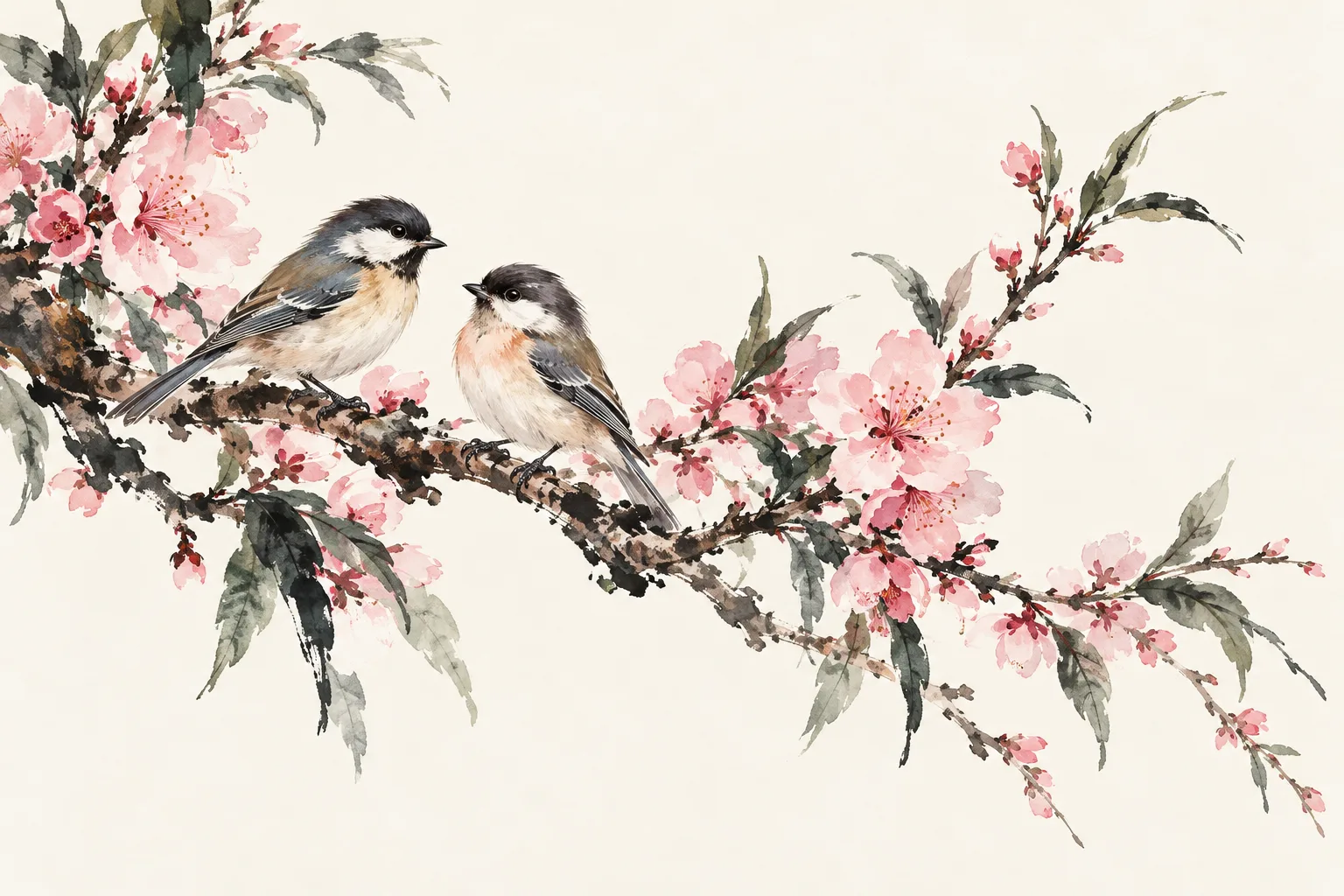
A record describes an object as catalogued at a particular moment, so a title can be a later label and a heading can change. The illustration accompanying this article is thematic, not a reproduction of any work discussed here.
National Palace Museum: Paintings and Their Museum Labels · The Met: Chinese Painting, Maxwell K. Hearn
A comparison sheet to fill in yourself
A suggestion for your next gallery visit: rule a page into seven columns, covering artist heading, date wording, support, format, attribution phrase, title source where the label gives one, and what the label says is depicted, then fill one row per record. Copy wording rather than summarizing it, since the difference between attributed and formerly attributed disappears in a summary.
Two further suggestions: read each label twice, once for what it states and once for what it leaves unstated, and treat a repeated title as a search term rather than an identifier. Where photography is permitted, photograph the label text itself instead of relying on your memory of it.
Questions readers ask
Does a shared title mean two records describe the same painting?
No. A title is a label. Compare artist heading, date wording, support, format and attribution phrase before concluding anything about identity.
If a label says Unidentified artist, has every earlier attribution been lost?
No. The Met's fan record carries Unidentified artist as its current heading while also noting a traditional attribution to Li Song.
Is attributed to a lower grade than formerly attributed?
They are not points on a scale. One sits in the current heading; the other marks an attribution the record does not present as its own current one. Copy the exact wording.
Sources
The Met: Chinese Painting, Maxwell K. Hearn — source notes checked 2026-10-20.
National Palace Museum: Paintings and Their Museum Labels — source notes checked 2026-10-20.
The Met: Pavilion on a pond — source notes checked 2026-10-20.
National Palace Museum: Peach Blossoms and Mountain Birds — source notes checked 2026-10-20.
Smithsonian: Flowers and birds — source notes checked 2026-10-20.