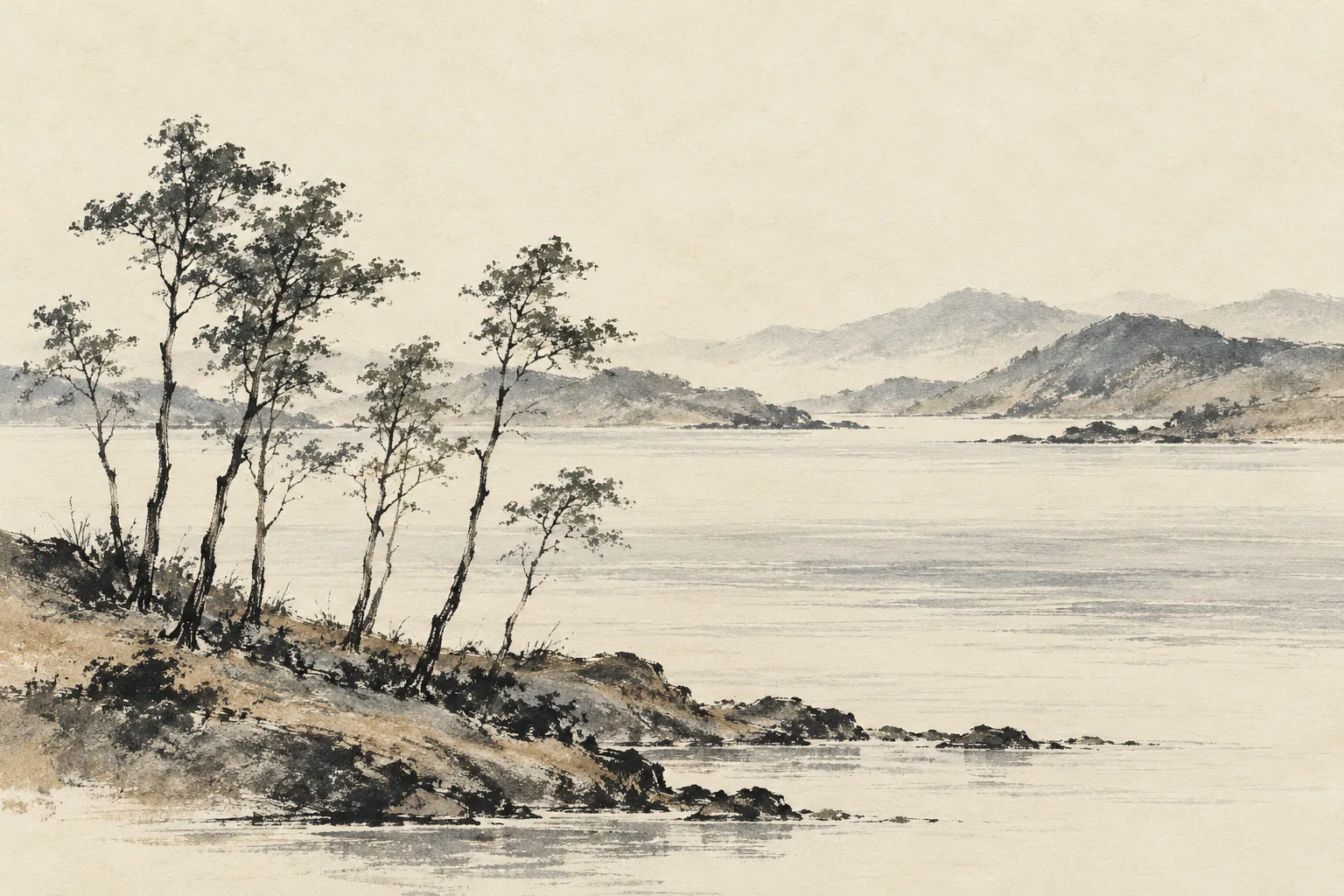
A later copy and a later addition are different kinds of evidence. A later copy is another painting made after the original; a later addition is material, such as an inscription or seal, added to the same object by a later owner or viewer. Museum labels can mention both, sometimes in the same record. The practical question is not whether something is old or new, but what the label says the later thing is attached to: a separate work or the work in front of you.
Read the phrase backwards: what does later modify?
Find the word later, then ask which noun it modifies. A label that says later copy is describing a second painting. A label that says later inscription, later seal or later addition is describing something attached to, written on, or kept with the first painting. The date range may be similar, but the object count is different. In the National Palace Museum exhibition, Scattered Trees and Distant Mountains is attributed to Ni Zan, and its label suggests a later copy. That wording points to a separate painting, not a mark added to the attributed work.
National Palace Museum: Paintings and Their Museum Labels
A later copy is a separate object, not a mark on this one
With a copy, the label is making a claim about the whole object: its authorship, its date, or its relation to another work. Words such as attributed to, formerly attributed to and in the style of can sit nearby, but they do different jobs. A copy can also carry an attribution. Treat these phrases as different kinds of claim, not as points on a numbered confidence scale. The useful check is to ask what the label is dating and what it is comparing. For Scattered Trees and Distant Mountains, the suggestion of a later copy belongs to the painting as a whole. It is not evidence that a later hand wrote on an earlier painting.
National Palace Museum: Paintings and Their Museum Labels
A later addition stays with the same object
The Met essay on Chinese painting describes later owners and viewers adding inscriptions and seals. Colophons can appear on borders or endpapers, and some writing sits on the image itself. The essay's example, Night-Shining White, is described as a work that grew through later additions. Here the object count stays one: the painting and its added writing are treated together. A label may list those additions without calling the painting a copy.
The Met: Chinese Painting, Maxwell K. Hearn
A two-column note you can make in the gallery
Try a simple exercise at the label. Draw two columns: same object and separate object. Under same object, write phrases about inscriptions, seals, colophons, borders, endpapers or later additions. Under separate object, write phrases about a copy, a later version, or a different work with a similar title. Then add a third line: what remains uncertain. This keeps a label's caution visible. It also stops a phrase such as formerly attributed from sliding into a claim about the image itself. The exercise is a viewing aid, not a verdict on the label.
What to look at after you leave the label
If the label describes a later addition, look at the edges of the image, the borders and any endpapers, and note where the label says the writing sits. If it describes a later copy, compare the attribution language and the date range with any related work named nearby. Keep current headings and older attributions in separate notes. The Met record for Pavilion on a pond lists Unidentified artist as the current heading and also notes a traditional attribution to Li Song. Unidentified artist is not proof that no historical attribution survives. These are viewing prompts, not authentication tests.
The Met: Chinese Painting, Maxwell K. Hearn · The Met: Pavilion on a pond
Questions readers ask
Does later copy mean the museum has proved the painting is a fake?
No. It is a cautious label description of a separate painting made later. It is not an authentication verdict, and it does not by itself settle who made the earlier work.
Can a painting have both a later copy label and later inscriptions?
In principle, yes. A copy is a separate object, and that copy can later receive inscriptions or seals. Read each label phrase for what it attaches to.
Should I write down the date range for a later addition?
Write down what the date range describes. A range for the painting is not the same as a date for an added inscription or seal.
Sources
The Met: Chinese Painting, Maxwell K. Hearn — source notes checked 2026-10-20.
National Palace Museum: Paintings and Their Museum Labels — source notes checked 2026-10-20.
The Met: Pavilion on a pond — source notes checked 2026-10-20.