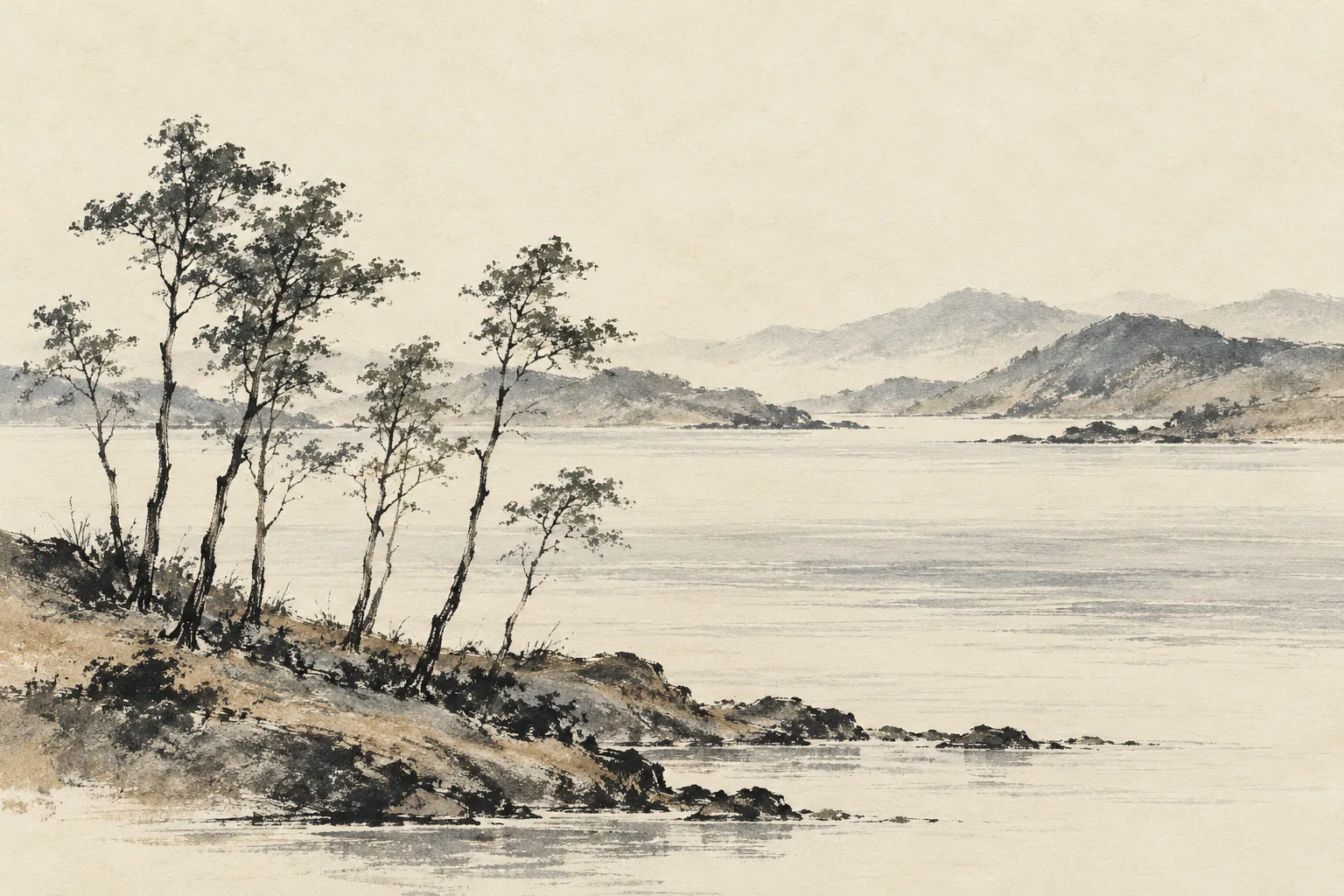
Compare labels first, surfaces second, conclusions last. A museum label already tells you what kind of comparison you are making: two works by one hand, a work and a later reinterpretation of it, or a painting and something only traditionally given to the same name. Read both labels in full, turn their factual claims into a checklist you can verify from where you stand, then write one sentence about what the second work keeps and what it changes. The steps below are suggestions, not rules.
Check format, support and heading before anything else
Labels usually open with a heading, a date and a medium, and those three items decide whether your comparison is like for like. A sixteenth- or seventeenth-century fan mounted as an album leaf, ink and color on silk, currently headed Unidentified artist and carrying a traditional attribution to Li Song, asks different questions than a hanging scroll: the fan's shape constrains composition, and the album leaf asks you to look close and small. When you compare across formats, compare only what the format does not dictate. When an older name is in play, say plainly that you are comparing an object with a reputation, not two documented hands.
The Met: Pavilion on a pond · National Palace Museum: Paintings and Their Museum Labels
Turn the label's own visual claims into a checklist
Labels name features because those features are legible and were judged worth pointing out, which makes them a ready-made checklist. One exhibition describes Ni Zan's Rongxi Studio as built around a river between two banks, and describes Wang Jian's Landscape in the Style of Ni Zan as a reinterpretation with a slanting tree and a foreground bank. Before deciding that the two feel different, find each named feature in the object in front of you; if one is hard to see, move along the wall before deciding it is absent. Keep a second caution from the same exhibition: Rongxi Studio's title comes from a later inscription mentioning Pan's residence, so the title is evidence about the label as much as about the picture.
National Palace Museum: Paintings and Their Museum Labels
Look at the writing and seals before the brushwork
Two works that look alike in reproduction often differ first in what later owners and viewers added. Inscriptions and seals could be added by later hands; colophons may sit on borders or endpapers, and some writing falls on the image itself. A pair that seems evenly matched in composition can be very unevenly documented, and writing on the image changes how much of the painted surface you actually see. A suggestion: for each work, note where the writing sits and how much room it takes before you compare brushwork at all. The Met's essay uses Night-Shining White as an example of a work that grew through later additions.
The Met: Chinese Painting, Maxwell K. Hearn
A ten-minute exercise for any pair
Stand where you can see both works, or one work and a good reproduction of the other. Before reading anything, list three concrete features in each and one difference you would bet on. Then read both labels and copy out every feature they name. Tick the ones you found; the unticked ones show where your looking needs work. Strike out any comparison that format or support rules out. Finish with one sentence of the form this work keeps X and changes Y. Keeping it short is the point: it forces you to say what you saw rather than what the wall text already told you.
A variation worth trying: do the exercise twice, once with the labels read first and once with them read last. The gap between the two attempts is usually the most useful thing you will learn about your own looking habits.
National Palace Museum: Paintings and Their Museum Labels
Where a comparison should stop
Comparison is good at showing difference and bad at explaining it. The Met's essay warns that interpretation depends on a particular work and its context rather than on a universal dictionary of symbols, so a slanting tree or a foreground bank is a described feature, not a code. No pair of labels tells you what an artist intended, and a later picture made in an earlier master's style is not evidence of how that master worked. Where one label says attributed to and another suggests a later copy, report the difference instead of resolving it yourself. Two objects are not a tradition.
The Met: Chinese Painting, Maxwell K. Hearn · National Palace Museum: Paintings and Their Museum Labels
Questions readers ask
Is it fair to compare a painting with one labelled attributed to?
Yes, provided you say which is which. Compare the object as the label describes it, and keep the current heading separate from any older attribution in your notes.
Should I compare the titles of the two works?
Carefully. A title may come from a later inscription rather than from the painter, so a comparison of titles is a comparison of labels and later viewers, not of pictures.
What if the two works hang in different museums?
Compare only what both labels state: date range, format, support and named features. Do not assume the two objects are the same size or that one label's silence means absence.
Sources
The Met: Chinese Painting, Maxwell K. Hearn — source notes checked 2026-10-20.
National Palace Museum: Paintings and Their Museum Labels — source notes checked 2026-10-20.
The Met: Pavilion on a pond — source notes checked 2026-10-20.