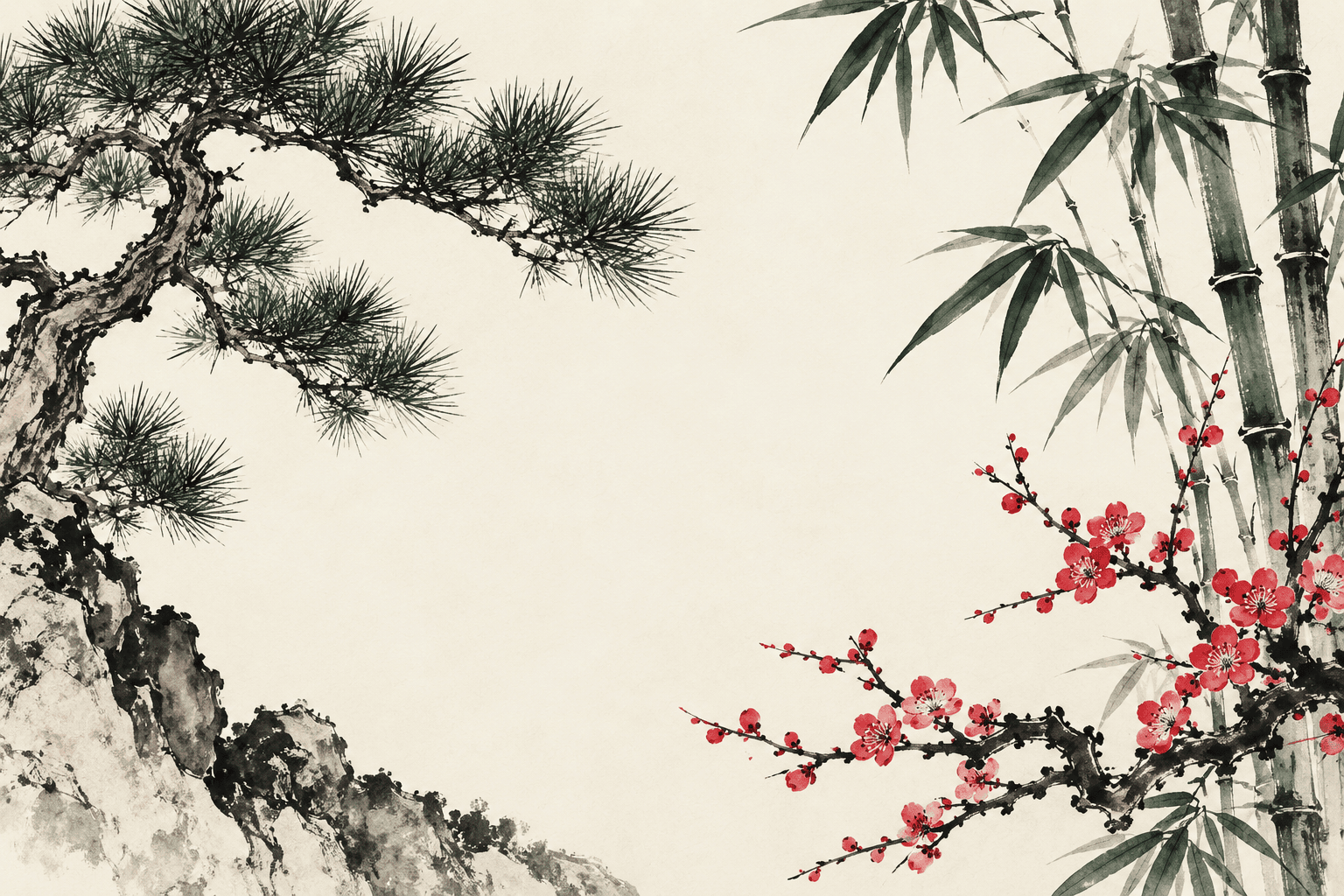
Pine, bamboo, and plum are called the Three Friends of Winter. The grouping begins with something visible: pine and bamboo stay green in cold weather, while plum flowers can appear early in the year. That seasonal resilience has made them symbols of endurance and renewal in Chinese visual culture. The Met’s Chinese Gardens exhibition describes these associations across painting and decorative arts.
Look at the plants before the symbols
Pine often brings an irregular trunk and dense needles; bamboo contributes long stems and pointed leaves; plum offers dark branches interrupted by small blossoms. Together they make a varied composition. Notice which plant dominates and which is a quiet accent. The artist may be studying shape and brushwork as much as invoking a moral idea.
The three plants do not always appear as a complete set. Bamboo alone, for example, can be a subject of sustained attention. Our guide to bamboo and rocks follows the physical marks of the brush before considering interpretation.
Avoid a one-symbol-fits-all reading
The meaning of a work also depends on its poem, dedication, artist, and occasion. A winter plant can mark a season, honor a friend, or help an artist explore a line. If a museum record identifies an inscription, read it alongside the image. If not, describe what you can see and treat symbolism as a possibility rather than a guaranteed translation.
That is a useful habit for any Chinese painting: begin with materials and composition, then add historical context. It keeps the work from becoming a list of fixed signs.
Explore next: Bamboo and rocks in Chinese ink painting and poetry in Chinese painting.