A story worth looking closer at.
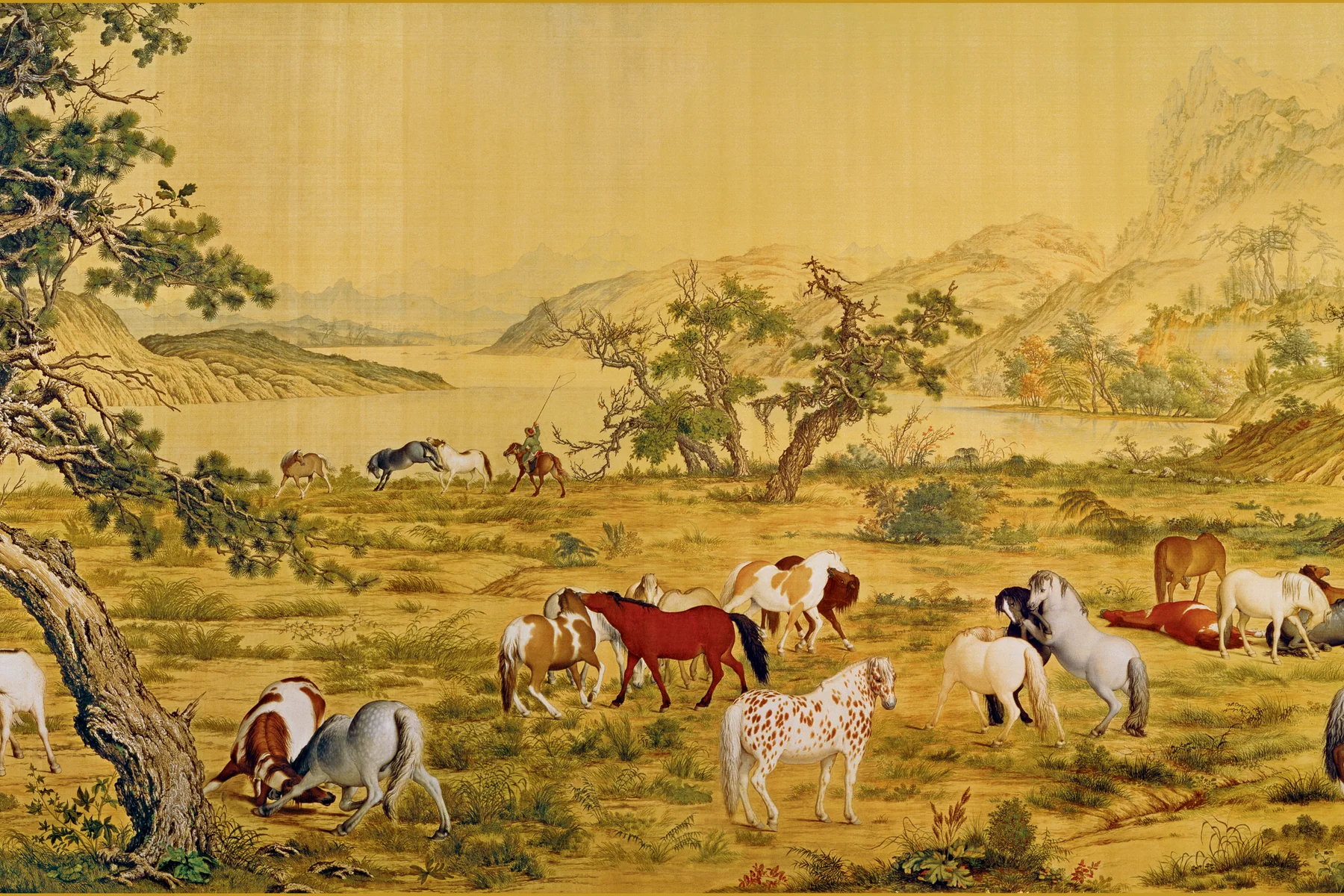
Painted in 1728, One Hundred Horses places horses in varied poses across a broad pastoral landscape. Its maker, Giuseppe Castiglione, is also known by his Chinese name, Lang Shining. The National Palace Museum’s exhibition traces the work to a Qing court commission. The long composition allows individual groups to gather into an expansive scene.
Energy and rest can belong to the same life. We are drawn to the changes of pace within this landscape: a reminder that strength need not always be displayed as speed. There is dignity in pausing as well as moving.
A contemporary reading by Huali. Your connection may be different.
A place in your home.
Choose a wide wall or a passage that keeps a group of horses intact. A living room with a low cabinet can offer a useful horizontal setting. Check the final crop carefully so that legs, heads and relationships are not cut off simply to fit a frame.
Traditional symbolism & cultural context
The courtly context is part of the work’s history. Our interest in balanced energy is a modern interpretation, not an assertion that every horse represents success or that a particular number brings luck.