A story worth looking closer at.
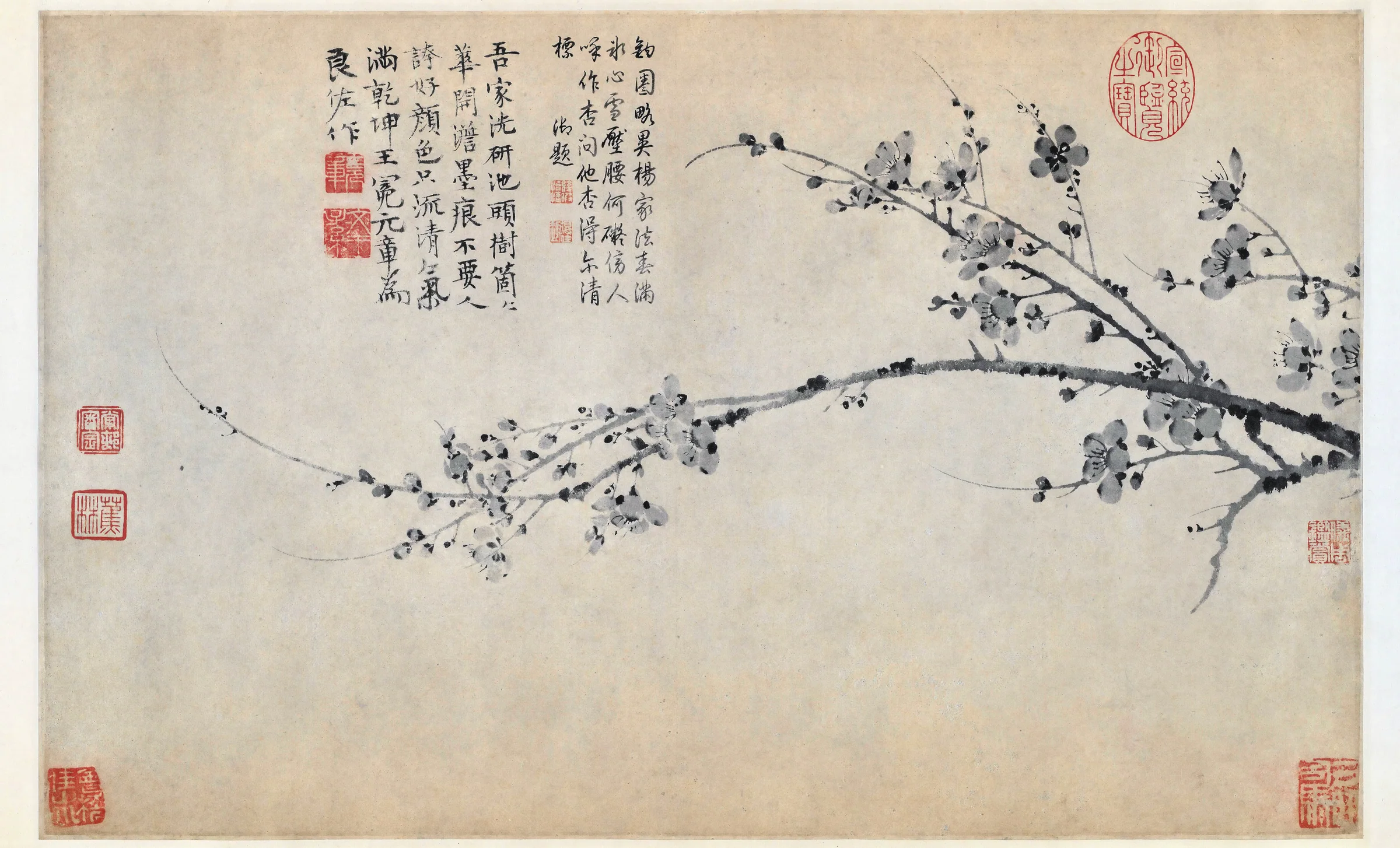
Wang Mian, a Yuan-dynasty painter, made the flowering plum a distinctive subject of ink painting. Museum accounts describe his combination of carefully observed blossoms and expressive brushwork. More than one plum painting by Wang Mian survives. This introduction concerns his plum-painting tradition; a particular date or inscription will only be attached once the final image is identified.
A blossom does not need to compete with the whole garden. We see in the ink plum a quiet space for self-respect: the freedom to keep your own pace, do careful work and let your character emerge without an audience.
A contemporary reading by Huali. Your connection may be different.
A place in your home.
Place a modestly sized print beside a desk or reading chair, where its lines can be seen closely. A simple mount and uncluttered surroundings allow the ink to remain the focus. Match the frame orientation to the final version.
Traditional symbolism & cultural context
Flowering plum has associations with purity and endurance in adversity in Chinese painting. These are cultural readings of the motif. They are not promises about what owning or displaying the image will bring.