A story worth looking closer at.
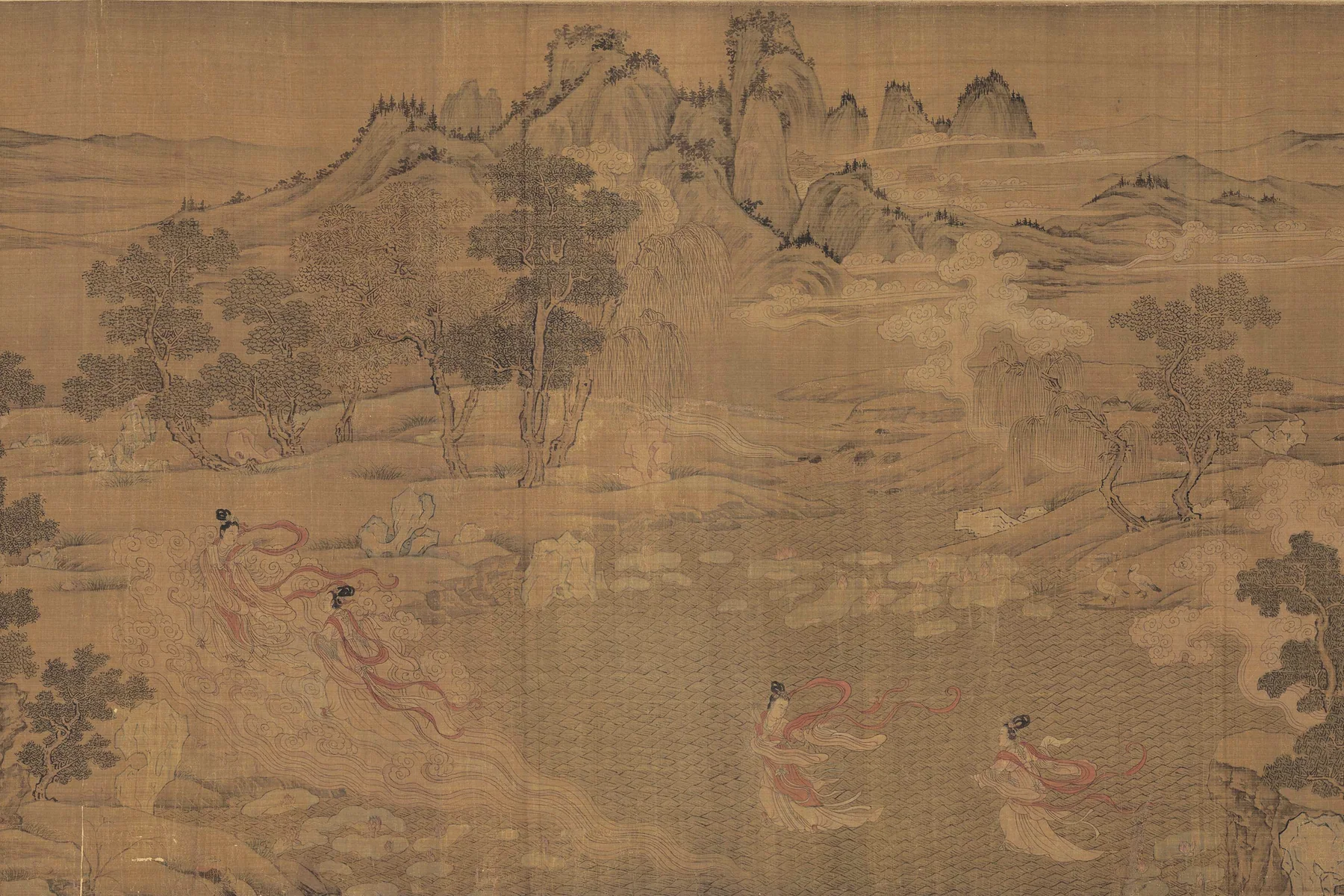
This painted narrative follows Cao Zhi’s Rhapsody on the Luo River, a literary encounter with a river goddess. Figures reappear as the story moves from meeting toward departure. The Palace Museum identifies its scroll as a Song-dynasty copy after an original traditionally attributed to Gu Kaizhi. That distinction matters: the surviving image is not presented as Gu’s original brushwork.
Some meetings are brief and still change the way we see the world. We read the movement between approach and distance as a space for memory, tenderness and the acceptance that a meaningful encounter need not last forever.
A contemporary reading by Huali. Your connection may be different.
A place in your home.
A reading room offers a natural setting for this literary work. Select a complete narrative passage and leave enough width to follow its figures. Gentle, even lighting can help the fine lines remain visible.
Traditional symbolism & cultural context
The river goddess belongs to a literary narrative. The painting can invite reflection on longing and separation, but it is not a charm for attracting a partner or controlling a relationship.